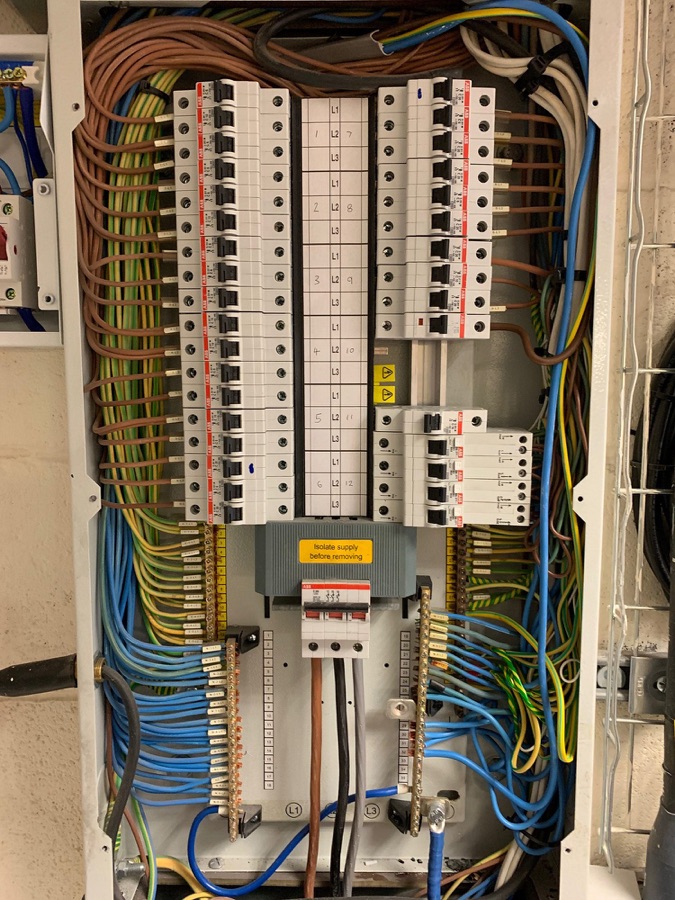
What the 18th Edition actually requires
- Surge protection devices (SPDs) for most domestic installations, protecting everything on the circuit from voltage spikes in one go.
- RCD protection on all socket circuits, previously only required in specific situations rather than as standard.
- AFDDs (arc fault detection devices) recommended for higher-risk properties like HMOs, care homes and buildings with a lot of combustible construction material.
Why old fuseboards get flagged
Rewireable fuses or plastic and wood-backed boards predate RCD protection entirely, so a fault that would trip a modern board instantly can go unnoticed on an older one. No SPD means a single power surge (from a lightning strike nearby, or even the grid switching load) can damage everything plugged in at once rather than just tripping a protective device.
Metal-clad consumer units became mandatory for domestic properties back in 2016, under the 17th Edition Amendment 3, specifically to reduce fire risk from arcing faults inside the board itself. If your fusebox is still in a plastic enclosure, that alone is usually enough to get flagged on an EICR, regardless of whether anything else is wrong.
What happens during an upgrade
- We isolate the supply, coordinating with your energy provider where needed.
- Fit a modern RCBO-protected board, metal-clad, with surge protection built in.
- Test every circuit individually rather than assuming the old wiring's fine just because the board's new.
- Issue an Electrical Installation Certificate confirming the work meets current regs.
Most upgrades are a single day's work with a short power-down window while the old board comes out and the new one goes in. We'll always tell you exactly how long you'll be without power before we start.